Commercial Excavation & Grading Contractor in East Texas
Features
Mass Grading and Cut/Fill
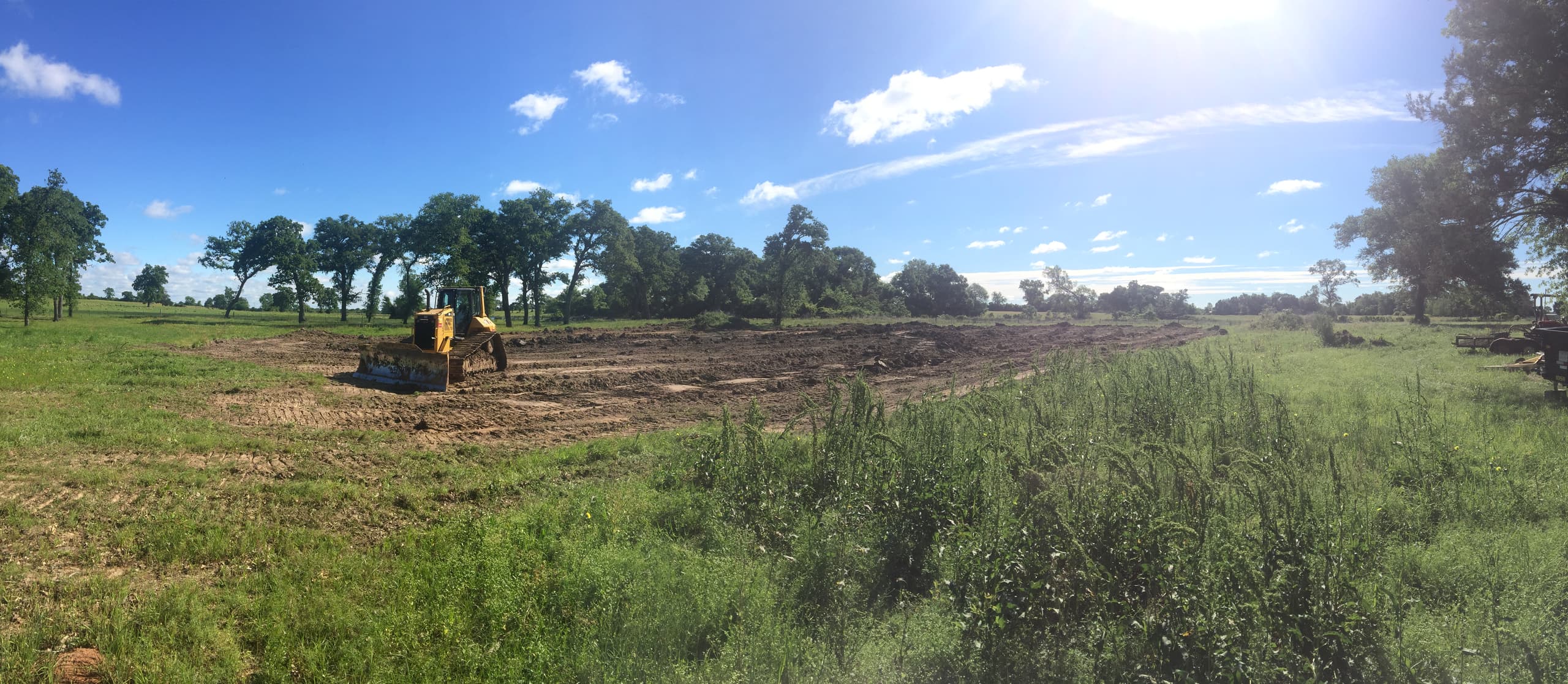
Dozers and excavators move the site from existing grade to the rough grading plan, balancing cut and fill on site where the design allows to keep import and export down.
Built to the Geotech Report
Proofrolling, over-excavation of unsuitable soils, moisture conditioning, select fill, and lift thickness all follow the geotechnical report, not habit.
Density Testing Coordinated
We schedule the testing lab around our lifts so density tests happen when they should and the reports are ready for the engineer and lender.
Building Pads and Paving Subgrade
Pads are brought to the plan elevation and compaction for the slab, and parking and drive areas to the subgrade the paving design calls for.
Ponds, Swales, and Utilities
Detention pond excavation, drainage swales, and storm, water, and sewer line installation can be part of the same earthwork package.
Fine Grade with a Motor Grader
After rough grade, our motor grader and track loaders bring pads, drives, and sheet-flow areas to finish grade.
Earthwork Built to the Grading Plan and the Geotech
On a commercial job the grading plan sets the elevations and the geotechnical report sets how the ground gets built: what has to be stripped, what native soil can stay, what needs to be over-excavated and replaced, how thick each lift can be, the moisture range, and the compaction target. We read both before we bid, because most earthwork surprises are already sitting in the geotech report for anyone who reads it closely.
Mass grading takes the site from existing grade to rough grade: cuts on the high side, compacted fill on the low side, and the cut/fill balance managed so the project imports and exports as little as the design allows. Building pads come up in lifts to the elevation on the plans, with select fill where the report calls for it under the slab. Parking and drive areas get the subgrade the paving engineer specified. Proofrolling finds soft areas before anything gets built on them, and soft spots get dug out and replaced instead of buried.
Compaction Testing Without Holding Up the Schedule
Density testing is done by a third-party testing lab, but someone has to have lifts ready when the technician shows up and keep work from getting ahead of the tests. We coordinate that: we schedule testing around our lift sequence, rework anything that fails, and keep a clean record of passing tests by area and lift for the engineer of record, the inspector, and the lender. A failed test found the same day costs an afternoon. Found after the slab is poured, it costs far more.
The Right Machine for Each Part of the Job
Our John Deere 850K and Caterpillar D6N dozers handle mass grading, cut and fill, and pushing material across a site. John Deere 350G and Caterpillar 320E excavators dig ponds, cut trenches, over-excavate soft areas, and load trucks. Our motor grader and John Deere 333G track loaders do fine grading and work tight areas around buildings and curbs. We use rollers for compaction and dump trucks for import and export, and bring in other equipment when a job calls for it.
That same earthwork package can include detention pond excavation, drainage swales built to the stormwater grading plan, and storm, water, and sewer line installation. When grading is done, we can pour the building slab too.
Sequencing, Mobilization, and What We Need to Bid
Earthwork sets the pace for every trade after it, so we plan our sequence around your critical path: erosion controls, clearing, mass grading, utilities, pads, and paving subgrade, in the order the job needs them. We give honest schedule projections — East Texas spring rain is real and we plan for it — and tell your superintendent early when weather or soil conditions change the plan. A typical job of ours has 20 to 30 people on site, with more brought in when the work calls for it.
To bid, send the civil grading and utility plans, the geotechnical report, the SWPPP or erosion control sheet, your schedule, and the bid due date. More on how earthwork fits the whole job is on our commercial site preparation page.
Frequently Asked Questions
Do you work from a geotechnical report?
Yes. Stripping depth, over-excavation, select fill, lift thickness, moisture range, and compaction targets all come from the geotechnical report and the civil plans. We read both before we bid.
Who handles compaction testing?
Testing is done by a third-party lab hired for the project. We coordinate the lab's visits with our lift sequence, rework anything that fails, and keep passing results organized by area and lift for the engineer, inspector, and lender.
Can you balance cut and fill on site?
Where the grading design allows it, yes. We plan the earthwork to reuse suitable cut material as fill and keep import and export to a minimum, and we tell you early if the soils or the design make a balance unrealistic.
Do you install underground utilities as part of grading?
Yes. We install storm, water, and sewer lines and sequence them with the grading so elevations stay right and backfill is compacted to spec.
Can you pour the slab after the pad is finished?
Yes. We pour building slabs and foundations to the engineer's design, so the same contractor that built and tested the pad pours on it.
Send Your Grading Plan for a Bid
Send your civil grading plan, geotechnical report, and schedule. We'll bid the excavation and grading, and the slab if you want one contractor through concrete. Questions? Call (936) 355-3471.