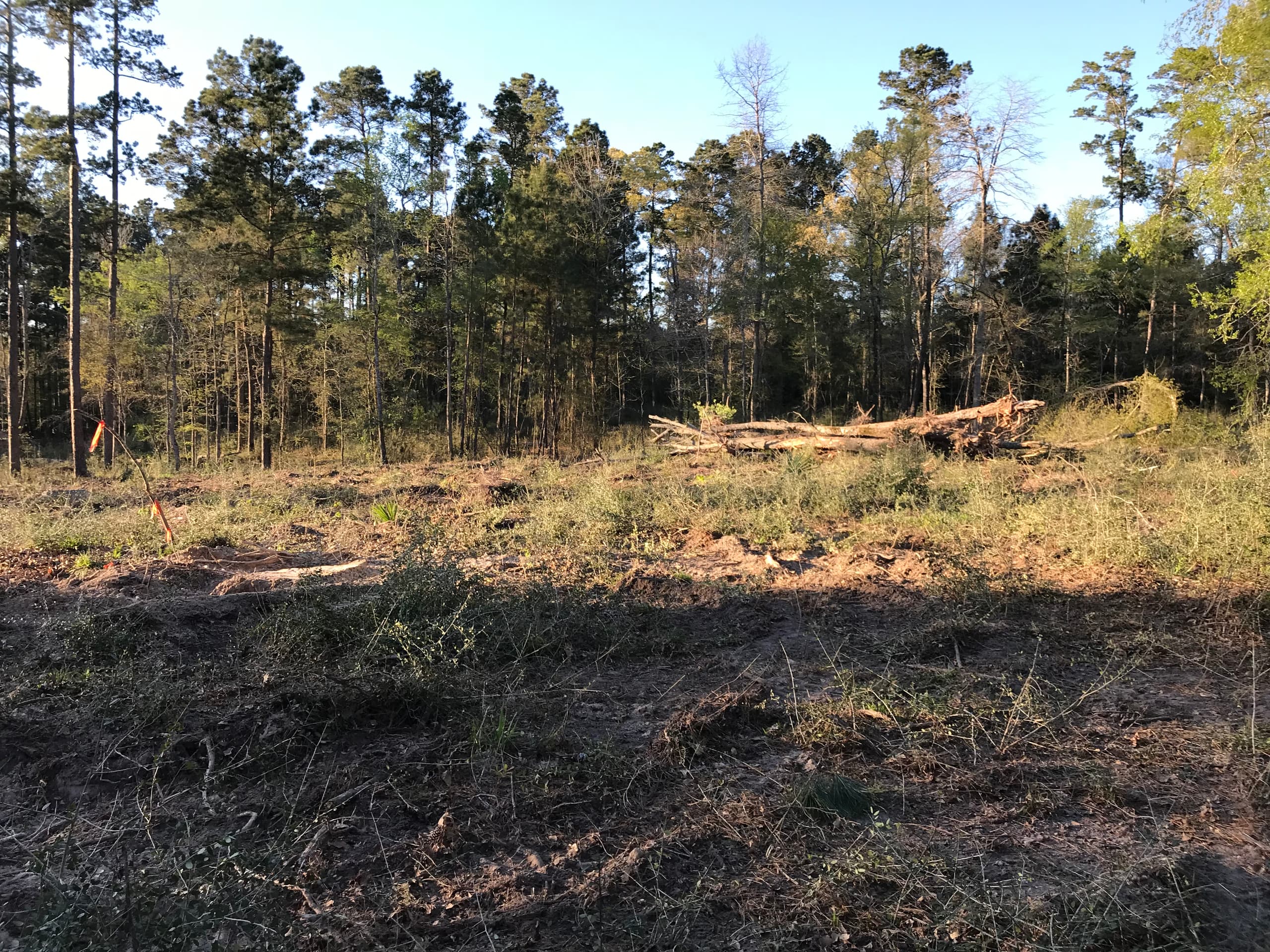
Commercial Land Clearing Contractor in East Texas
Features
Clearing Limits from the Plans
We clear to the limits of construction shown on the civil sheets and flag protected trees and buffers before work starts, so nothing outside the line gets touched.
Grubbing Under Structural Areas
Stumps, roots, and organic topsoil come out under building pads, paving, and fill areas — the material your geotech says can't stay under a structure.
Erosion Controls First
Silt fence, inlet protection, and the stabilized construction entrance go in before clearing, as the stormwater plan requires.
Mulch, Haul, or Stockpile
Forestry mulching heads for underbrush and buffers, excavators and dozers for timber and stumps. Debris is mulched on site, hauled off, or stockpiled — whatever the project allows.
Phased Clearing
On larger tracts we clear in phases that match your grading and utility sequence, so cleared ground isn't left open to rain for months.
Straight Into Grading
The same crew moves from clearing into excavation, grading, and the slab, so there's no gap between trades waiting on a new mobilization.
Commercial Clearing Is Defined by the Plans
Residential clearing is usually "clear this area." Commercial clearing is defined on paper: a limit of construction line, trees and buffers the city or the landscape plan says must stay, utility corridors, and the areas the geotechnical report says have to be stripped of organics before fill goes in. We start by walking those lines against the civil sheets and flagging what stays. Clearing past the limit can cost a project a fine, a replanting requirement, or a buffer it was counting on.
Under building pads, paving, and fill areas, clearing means grubbing too — stumps and root mats out, and the organic topsoil stripped to the depth the geotech calls for. That stripped material is stockpiled for re-spreading on landscaped areas or hauled off, depending on the plan. Outside structural areas, clearing can be lighter, and forestry mulching is often the cleanest way to open up underbrush, buffers, and utility corridors without tearing up the ground.
Stormwater Comes Before the First Tree
On a commercial site, clearing is the first land disturbance, which makes it the moment the stormwater plan starts to matter. Coverage under TCEQ's construction stormwater general permit and the stormwater pollution prevention plan (SWPPP) belong to the project's operators — usually the owner or developer and the general contractor. Our part is installing the controls the SWPPP calls for — silt fence, inlet protection, a stabilized construction entrance — before clearing starts, and keeping them working through our phase of the job.
Phasing helps too. On a large tract, clearing everything on day one leaves bare ground exposed through every storm until grading catches up. We'd rather clear in phases that match the grading and utility sequence.
Equipment, Crew, and Where the Debris Goes
We clear with John Deere 850K and Caterpillar D6N dozers, John Deere 350G and Caterpillar 320E excavators, and John Deere 333G track loaders running forestry mulching heads, and we use dump trucks for haul-off. Other equipment comes in when a job needs it. A typical job of ours has 20 to 30 people on site, with more brought in for bigger work.
Debris handling is set by the project: mulched in place, hauled to an approved site, or stockpiled for later. Tell us what your plans, permits, and local rules allow, and we'll price the method that fits. When clearing is done, the same crew can roll straight into excavation and grading and, if you want one contractor through the slab, the concrete.
What We Need to Bid Commercial Clearing
- Civil sheets showing the limits of construction, tree protection, and any buffers
- The geotechnical report, if it specifies stripping depths
- The SWPPP or erosion control sheet
- Your schedule and any phasing
- Whether debris can be mulched on site or must be hauled off
For the full picture of how clearing fits with the rest of a commercial job, see our commercial site preparation page.
Frequently Asked Questions
Do you clear to the limits of construction on our civil plans?
Yes. We walk the limits and tree-protection areas against your civil sheets and flag them before clearing starts. Nothing outside the line gets cleared.
Who is responsible for the SWPPP during clearing?
Permit coverage and the SWPPP belong to the project's operators, usually the owner or developer and the general contractor. We install and maintain the erosion controls the SWPPP calls for during our work, starting before the first tree comes down.
Can you mulch debris on site instead of hauling it off?
Often, yes. We run forestry mulching heads for underbrush, buffers, and corridors. Whether mulching, hauling, or stockpiling is allowed depends on your plans and local rules, so we price the method your project permits.
Can you continue into grading and the slab after clearing?
Yes. The same crew moves from clearing into excavation, grading, building pads, and the concrete slab, so a GC or owner can use one contractor from the first tree to finished concrete.
Send Us Your Clearing Plan
Send the civil sheets showing your limits of construction and tree protection, and your schedule. We'll bid the clearing — and the grading and slab if you want them. Questions? Call (936) 355-3471.